

Riyadh - Sharikat Mubasher: JLL, the leading global commercial real estate services and investment management company, released its ‘Middle East and Africa Flexible Workspace Market Report 2026’ that examines the region’s flexible workspace market.
The report showed that three Middle Eastern markets — Abu Dhabi, Dubai and Riyadh — are at different stages of flexible workspace development, each with distinct supply levels, tenant mix, and demand patterns.
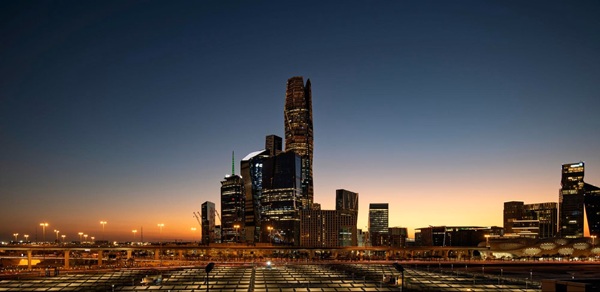
Riyadh expanded rapidly, with the majority of its current stock delivered since 2022. This signals the capital's shift from a nascent to an established market, as demand is driven by the Vision 2030's Regional Headquarters (RHQ) Program.
With a total supply of 400,000 square feet in Riyadh, new company setups account for nearly 55% to 60% of total flexible workspace demand, while international occupiers account for 50% to 60%. This substantial expansion is fueled by Riyadh's expanding entrepreneurial ecosystem and the rapid formation of small and medium-sized enterprises (SMEs).
Overall occupancy in Riyadh ranges between 85% and 90%, with Olaya District and King Abdullah Financial District (KAFD) emerging as the top-performing areas. The Olaya District showed an occupancy rate of nearly 90%, while KAFD stayed in the mid-80% range. Strong demand has kept occupancy high despite rapid supply growth, helped by Vision 2030 momentum and international corporate relocations.
International occupiers are heavily concentrated in several areas, nearly 60% in KAFD and just over 50% in Olaya, correlating directly with occupancy performance.
Technology, consulting, and professional services companies dominate the tenant mix, with consulting companies serving both public sector advisory needs and private sector transformation mandates. Professional services include legal, accounting, and corporate services companies that support multinational market entry and ongoing compliance requirements.
Paul Salnikoff, Founder and CEO of The Executive Centre at JLL, said: “Managing occupancy rates, maintaining service quality standards, and adapting to changing market conditions represent ongoing priorities. These challenges manifest differently across Dubai's competitive maturity, Abu Dhabi's constrained supply environment, and Riyadh's rapid transformation phase.”
The report also affirmed that the Middle East and Africa flexible office sector has recovered from pandemic disruption, positioned for sustained growth at precisely the moment when structural demand drivers, such as AI-driven workplace transformation, Vision 2030 economic diversification, hybrid work standardization, and accelerating African urbanization, converge to create opportunity beyond cyclical dynamics.